Shreveport grew fast along the Red River in the 1830s. The river deposits left behind a maze of clay, silt, and loose sand layers. These hidden transitions cause differential settlement. A standard SPT can miss thin soft seams. The CPT cone senses them instantly. Our team runs ASTM D5778 electric cone tests across Caddo Parish to map stratigraphy without gaps. For sites near Cross Lake or the river where sand layers dominate, we combine CPT data with liquefaction screening to check seismic response. For deep bridge or tower loads we pair it with pile design analysis using tip resistance and sleeve friction directly from the cone. Every test gets calibrated before and after the push. We use 15 cm² cones with 2 cm/s penetration rate. Data streams live to the operator screen. No cuttings. No disturbance. Just a continuous log of soil behavior.
One CPT push gives you tip resistance, sleeve friction, and pore pressure every centimeter. No gaps. No sample disturbance.
Process and scope
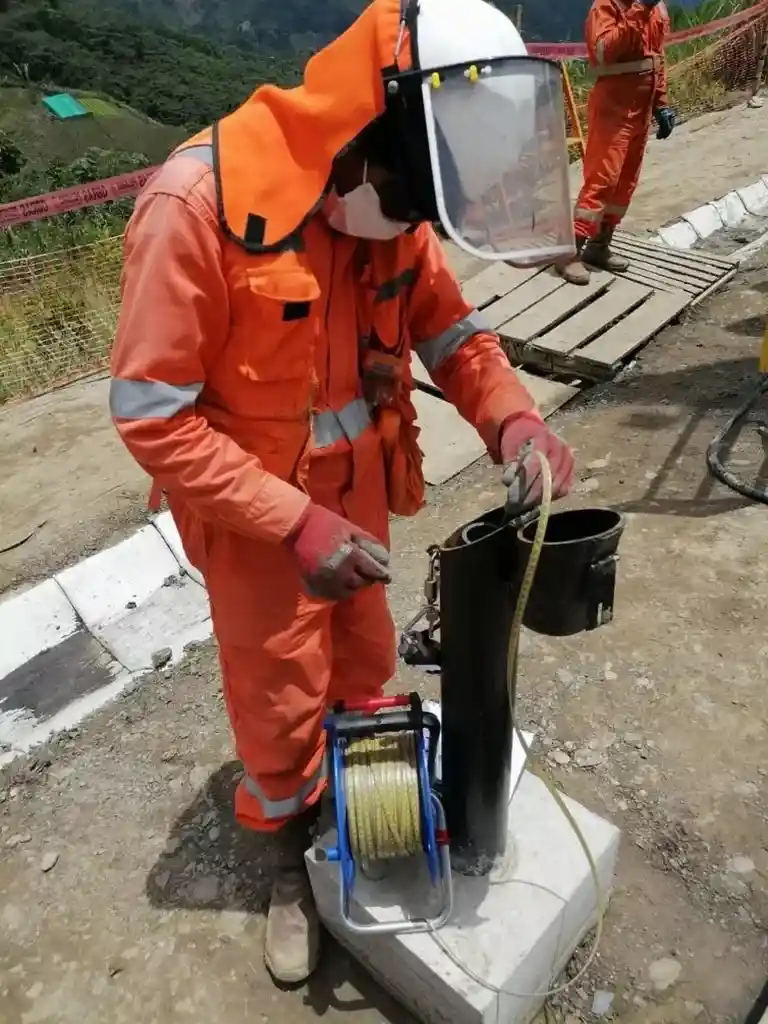
Site-specific factors
The CPT rig is a 20-ton truck with hydraulic rams and leveling jacks. It sits directly over the push point. The operator zeroes the load cell and starts the push. If the cone hits a dense sand lens or a gravel pocket, sleeve friction spikes. The rig's reaction weight must exceed the total push force or the rods buckle. In Shreveport's alluvium, we sometimes encounter buried tree trunks or old revetment debris near the river. That stops the cone dead. We then pre-drill through the obstruction and continue. Pore pressure dissipation tests require the rig to hold position for 30-60 minutes. That demands stable ground and no nearby traffic vibration. We always scan for underground utilities before setting up. Pushing a cone into a gas line is catastrophic. Zero incidents in our record.
Standards used
ASTM D5778 - Standard Test Method for Electronic Friction Cone and Piezocone Penetration Testing of Soils, ASTM D2487 - Standard Practice for Classification of Soils for Engineering Purposes, ASCE 7-22 - Minimum Design Loads and Associated Criteria for Buildings and Other Structures, IBC 2021 - International Building Code (geotechnical investigation requirements)
Complementary services
Single CPT Sounding
One push to refusal or target depth. Includes qc, fs, u2 log, friction ratio plot, and soil behavior type classification per Robertson chart.
CPT with Pore Pressure Dissipation
Standard sounding plus dissipation tests at select clay layers. Estimates coefficient of consolidation for settlement rate calculations.
Seismic CPT (SCPT) Add-on
Intermittent downhole shear wave velocity measurements during the push. Provides Vs profile for site class determination per IBC.
Typical parameters
FAQ
How deep can a CPT go in Shreveport?
Most pushes reach 60 to 80 feet in typical alluvial soils. With a 20-ton reaction rig and dense sand refusal, we can sometimes hit 100 feet. Depth depends on soil resistance. The cone stops when tip stress exceeds 50 MPa or when we hit gravel, hardpan, or an obstruction.
What does a CPT test cost in Shreveport?
A single CPT sounding in the Shreveport area ranges from US$140 to US$260. Mobilization is separate and depends on distance. Seismic CPT add-ons and pore pressure dissipation tests increase the per-sounding cost. We deliver a firm quote after reviewing the site location and number of soundings needed.
Can CPT replace soil borings completely?
No. CPT gives continuous strength and stratigraphy data but does not recover soil samples. You still need at least one boring per site to confirm soil type visually and run lab tests like Atterberg limits and grain size analysis. We use CPT to fill the gaps between borings, reducing the total number of drill holes.
How fast do we get the CPT results?
The field data is digital and ready immediately. We deliver a draft PDF log and raw CSV file within 24 to 48 hours of completing the field work. Final signed reports with soil behavior type interpretation follow shortly after.