On a recent commercial project off Youree Drive, the initial borehole logs told a misleading story. The upper 8 feet looked like stiff clay, but the SPT blow counts dropped drastically below the water table—classic Red River alluvium behavior. That's the kind of subsurface surprise that eats foundation budgets if you're not prepared. In Shreveport, the mix of Pleistocene terraces and soft Holocene floodplain deposits demands more than a generic geotech report. Our team runs the Standard Penetration Test per ASTM D1586 using automatic trip hammers calibrated to 140 lb weight and 30-inch drop, so N-values are consistent and defensible. For deeper profiles where continuous data is valuable, we often pair SPT with a CPT test to capture transition zones that split-spoon sampling might miss, and for sites with fill history we cross-check disturbed zones using test pits to visually confirm stratigraphy before the drill rig arrives.
In the Red River alluvium, SPT N-values below 6 at 15 feet depth are common—miss that zone and your pile lengths will be wrong by 20 feet or more.
Process and scope
Site-specific factors
Shreveport's climate swings from summer saturation to winter drying cycles, and that seasonal moisture fluctuation wreaks havoc on expansive clays in the upper 10 feet. SPT data collected during a wet February will show softened N-values that don't reflect the soil's drained strength come August. The risk is real: a foundation designed on winter data might be overly conservative, or worse, a pavement section designed on dry-season data could fail after the first heavy rain. We mitigate this by recording the date, antecedent rainfall, and boring depth to groundwater on every log, then applying engineering judgment—not just software defaults—when selecting design parameters. For deep excavations near the river, ignoring low-blowcount zones can lead to basal heave; that's why we cross-reference SPT results with slope stability analysis and, where needed, liquefaction assessment per Seed & Idriss methodology for the seismic demands in ASCE 7-22.
Standards used
ASTM D1586 — Standard Test Method for SPT and Split-Barrel Sampling of Soils, ASTM D2487 — Unified Soil Classification System (USCS), ASCE 7-22 — Minimum Design Loads for Buildings, IBC 2021 — International Building Code (foundation provisions), Louisiana DOTD — Standard Specifications for Roads and Bridges
Complementary services
Drilling and Sampling
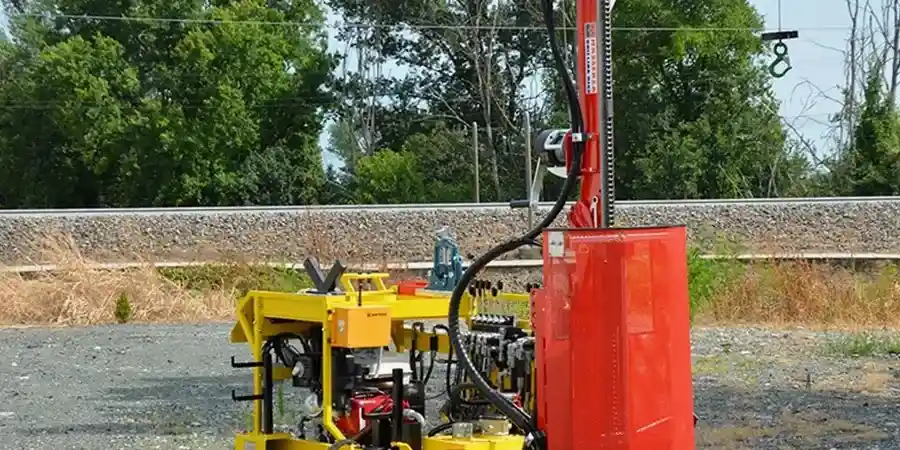
Truck-mounted auger rigs with automatic hammers. We handle city ROW permits, utility clearance via LA One Call, and traffic control for commercial sites in Shreveport.
Lab Classification
Every split-spoon sample goes through visual classification, moisture content, and selected Atterberg limits and grain-size analysis at our ISO 17025-accredited lab.
Engineering Report
Borehole logs with N-values, USCS classification, groundwater data, and foundation recommendations (bearing capacity, settlement, pile axial capacity) stamped by a Louisiana-licensed PE.
Correlation Studies
We correlate SPT data with shear wave velocity, undrained shear strength, and relative density for liquefaction triggering and site class determination per ASCE 7 Chapter 20.
Typical parameters
FAQ
How much does an SPT boring cost in Shreveport?
For a standard 30-foot boring with automatic hammer, sampling, and engineering report, budget between US$580 and US$720 per hole. Depth, access constraints, and traffic control requirements can push the upper end—especially on tight commercial lots in the Youree Drive corridor.
How deep do you drill for a typical Shreveport foundation study?
Depends on the structure. For shallow foundations on a two-story commercial building, we go 20 to 30 feet. For deep foundations—piles or drilled shafts—we typically extend to 60 feet or more, until we hit competent Pleistocene terrace deposits or refuse. The IBC requires borings to extend through all unsuitable strata.
What's the turnaround time for an SPT report?
Fieldwork is usually one to two days per site. Lab classification runs three to five business days. The full stamped report with foundation recommendations is typically delivered in seven to ten working days from mobilization—faster if the project is on a critical path and we coordinate lab priority.
Do you need a Louisiana-licensed driller on site?
Yes. Louisiana requires water well and geotechnical drillers to be licensed through the Department of Natural Resources. Our lead driller holds an active Louisiana DNR license, and the engineering report is stamped by a Louisiana-registered Professional Engineer—both are non-negotiable for permit-ready submittals in Shreveport.